
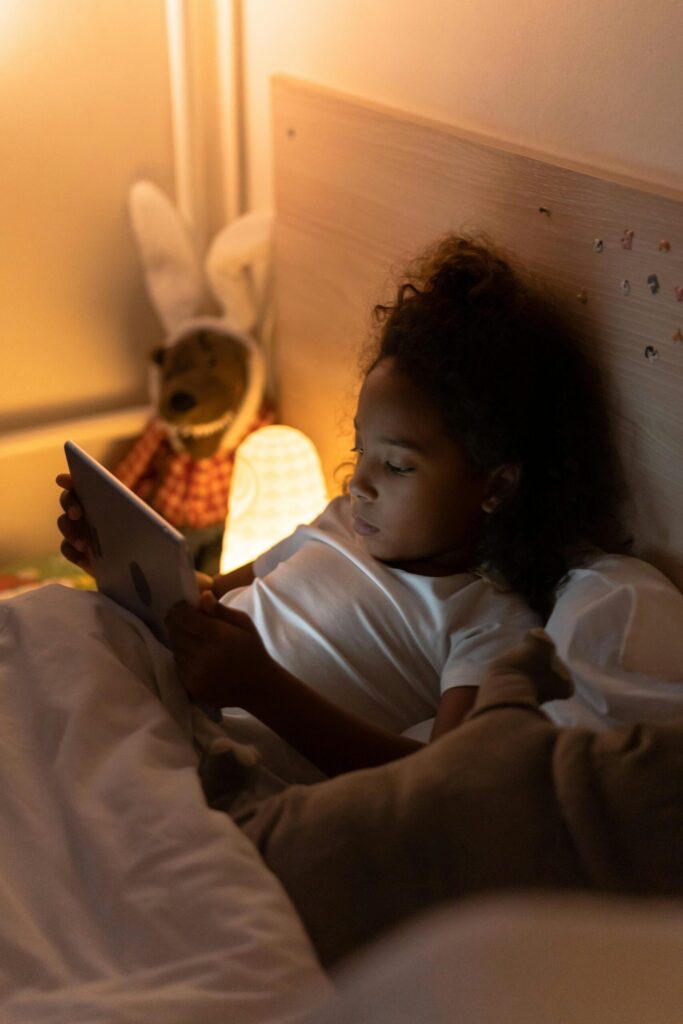
If it feels like your child is more irritable or “wired but tired” lately, you aren’t alone. In 2026, New Zealand students are among the highest users of digital devices in the world, both in the classroom and at home. While technology is a vital tool, it’s creating a hidden “sleep debt” for our tamariki.
The Science: Why Screens Hijack Sleep
Our brains are hardwired to respond to the sun. The blue light emitted by phones, tablets, and even school laptops mimics morning sunlight.
When your child scrolls before bed, their brain thinks it’s midday. This suppresses melatonin—the hormone that tells the body it’s time to sleep. In fact, research shows that children’s eyes are even more sensitive to this light than adults’, suppressing melatonin twice as much.
The NZ Context: The “Double Load”
With the government’s 2024 “Phones Away for the Day” policy, many parents hoped for a digital break. However, because many NZ schools still utilize “one-to-one” laptop programs for learning, our kids’ brains are often processing high-intensity blue light from 9 AM until dinner time. By the time they hit the pillow, they are in a state of “Cognitive Static.”
3 Ways to Beat the “Blue Light Trap”
- 1. The “Digital Sunset” Rule: Establish a firm “no-screens” policy at least 60 minutes before bed. Use this time for low-stimulus activities like reading a physical book, a warm bath, or drawing.
- 2. Chase the Morning Sun: Counteract evening blue light with natural morning light. Encouraging your kids to step outside for 10 minutes before school helps “reset” their internal body clock, making it easier for them to fall asleep naturally 12 hours later.
- 3. Move the Charger: The bedroom should be a “sacred space” for sleep. Charge all devices—including school laptops—in a central family area like the kitchen. This removes the temptation of a “quick check” that can turn into an hour of lost sleep.
Quick Stats for Kiwi Parents:
- Primary students (5–13): Need 9–11 hours of sleep.
- Teens (14–17): Need 8–10 hours of sleep.
- The Goal: A “Blue Light Free” hour before bed can improve sleep quality by up to 30%.